
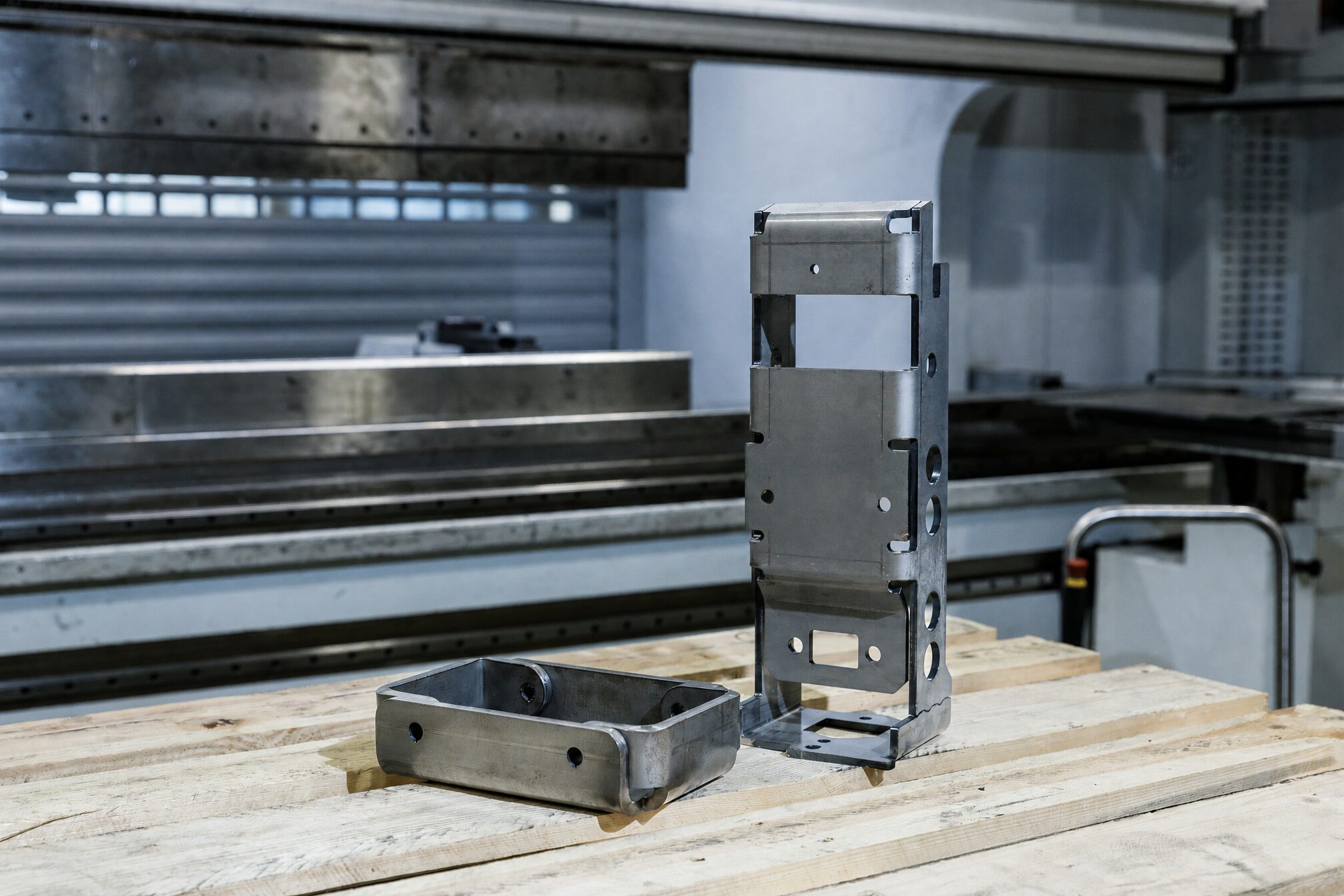
When components need to fit precisely later on, CNC bending relies on accurate bend angles and cost-effective manufacturing. HALLER Metall manufactures CNC-bent parts according to drawings or CAD data and tailors the production process to the material, material thickness, bend flanges, bend radius, bend length, and angle tolerance.
CNC Bending and CNC Bending Technology
In CNC bending, blanked parts are precisely formed using a CNC bending machine. This process produces folded parts, angled parts, housing components, brackets, covers, and complex bent parts for a wide variety of applications.
For our customers, this means:
Components are not simply bent, but prepared in such a way that they function properly in subsequent processing. The more precisely the CNC-bent part is manufactured, the easier it is to assemble, weld, or further process it into a subassembly.
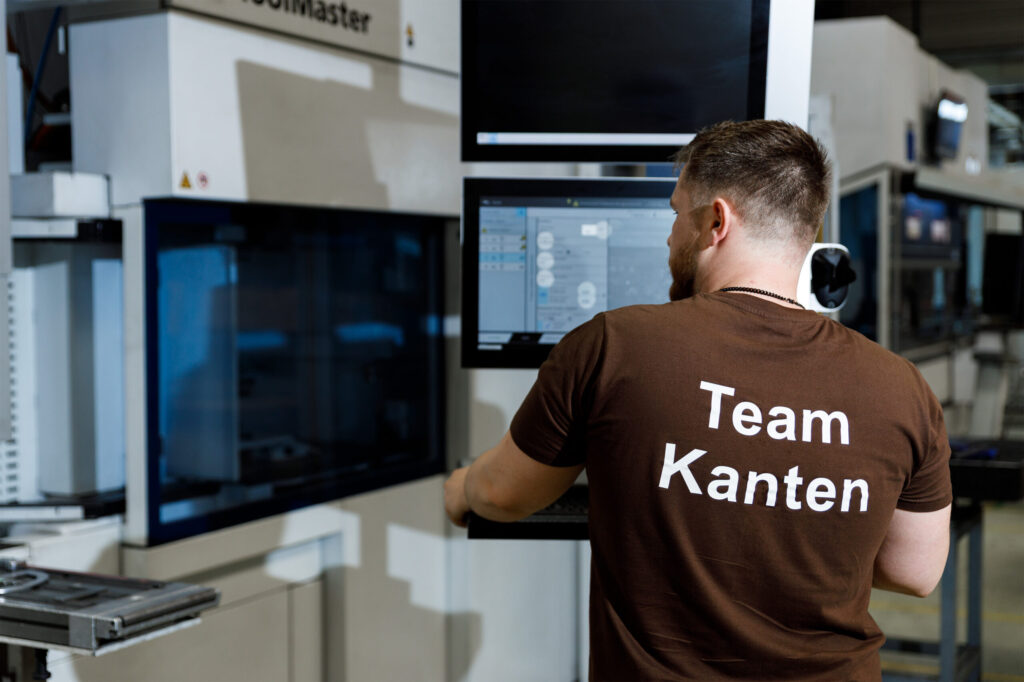
CNC Sheet Metal Bending and Sheet Metal Fabrication – Our Services
We offer precise CNC bending technology for a wide range of components and requirements:
- CNC bending of steel, stainless steel, aluminum, copper, brass, and POM
- CNC sheet metal bending: precise folding of flat blanks
- Manufacturing of CNC-bent parts based on drawings or CAD data
- Folded parts, angled parts, brackets, covers, housing components, etc.
- Individual parts, small-batch production, and mass production
- Further processing of bent parts into assemblies
By combining CNC bending, laser cutting, welding, and other metalworking processes, we create solutions tailored to the final component and the entire manufacturing process.
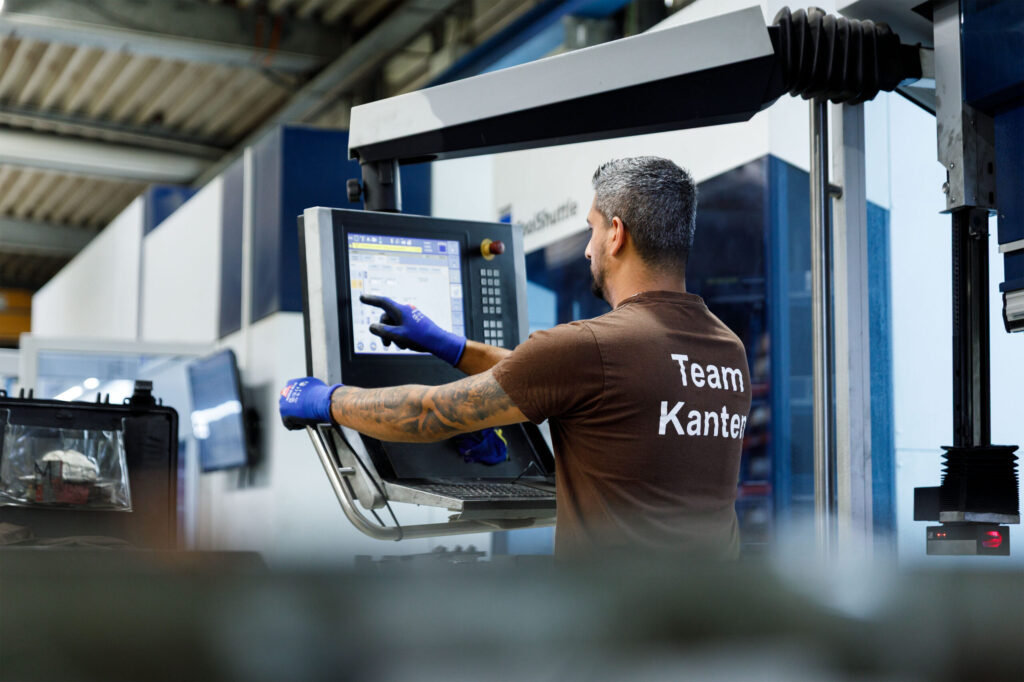
How does CNC bending work?
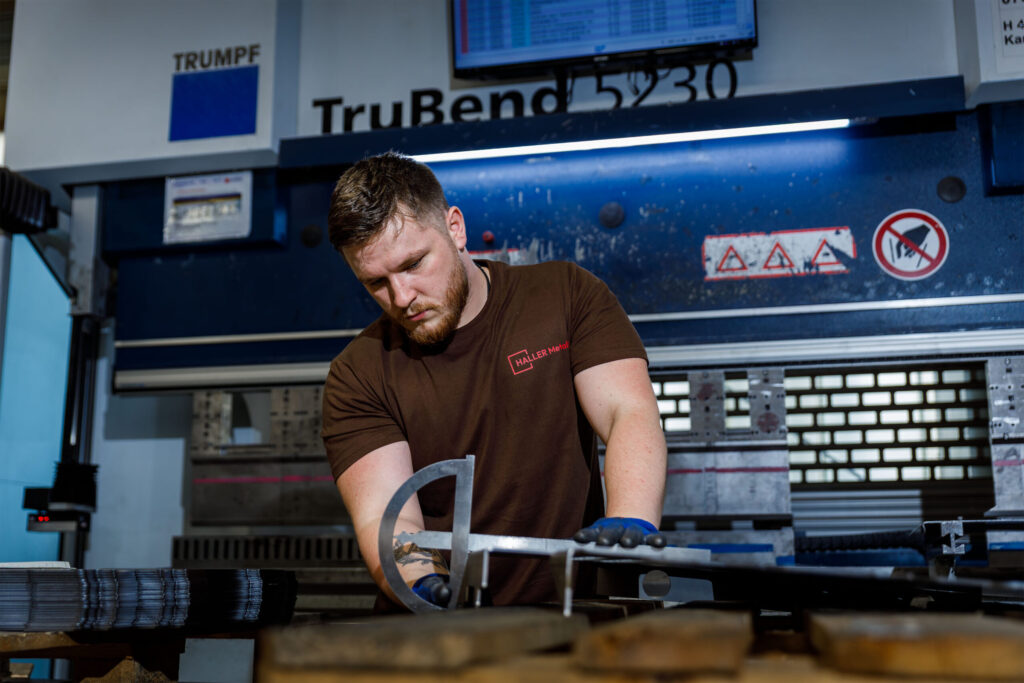
In CNC bending, a prepared blank is positioned against the rear and side stops and bent to the desired angle between the upper and lower dies using controlled pressure. The CNC bending machine controls the bending process with precision and repeatability.
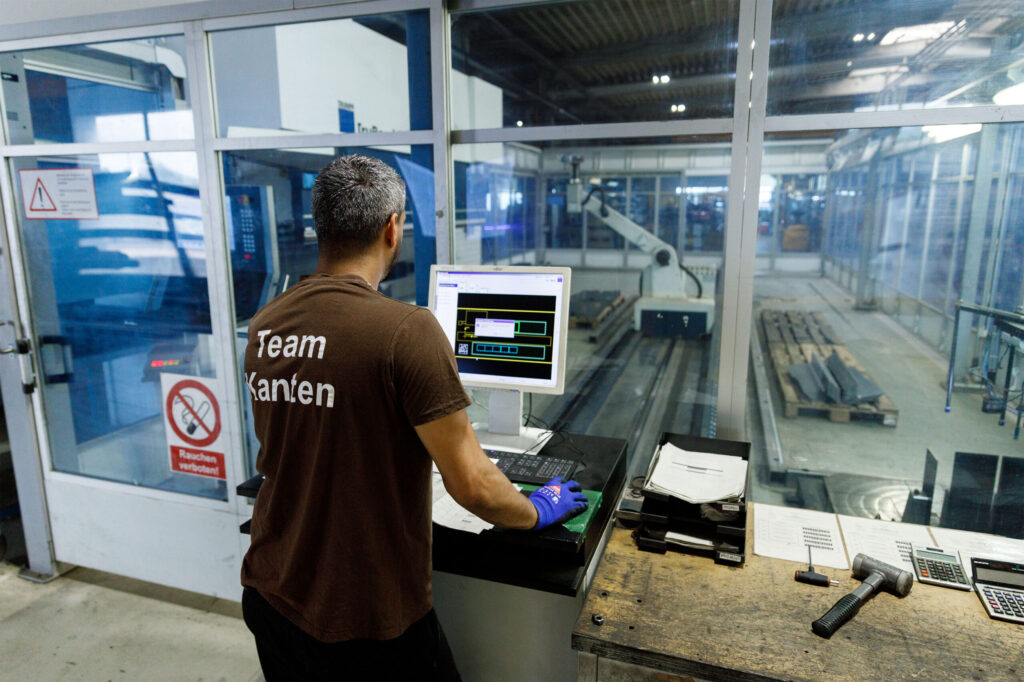
A CNC sheet metal bending machine, as well as modern CNC bending machines, ensure a high degree of process reliability—especially for components that must be manufactured in large quantities or to tight tolerances.
High accuracy achieved through angle measurement systems and hydraulic crowning
A key advantage of CNC bending is its high precision. This is supported, among other things, by an angle measurement system and hydraulic crowning. This reduces angular deviations and ensures consistent results along the entire bend length.
For your manufacturing process, this means that CNC-bent parts fit better, can be assembled more reliably, and require less rework.
When is CNC bending the right choice?
CNC bending is always the right choice when metal parts or engineering plastics need to be formed in a controlled manner and dimensional accuracy is critical.
- CNC bending: ideal for precise edges, angles, and repeatable bent parts
- CNC bending technology: ideal for components that will later be welded, assembled, or used as subassemblies
- Combined manufacturing: useful when blanks are first laser-cut and then bent
CNC bending of steel, stainless steel, aluminum, and other materials
We process various materials using CNC bending:
- Steel
- Stainless steel
- Aluminum
- Copper
- Brass
- POM
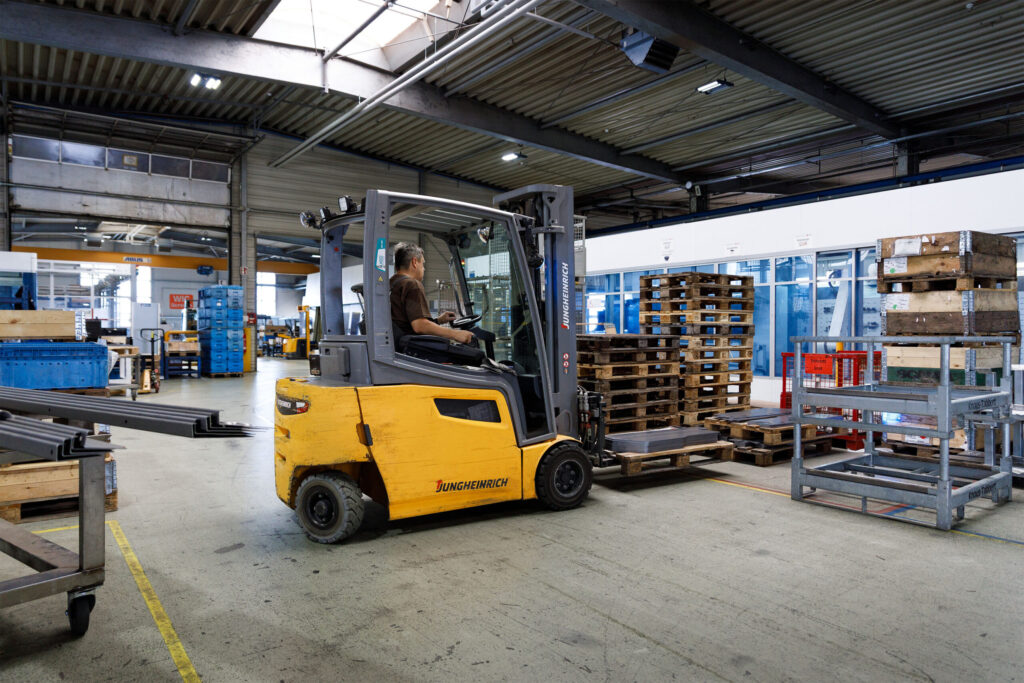
The material thicknesses and grades that can be processed depend on the part geometry. Key factors include material thickness, flange width, bend radius, bend length, desired angle tolerance, and nesting height.
This ensures that the final bent part not only looks good on paper but also performs well in practical applications.
The advantages of CNC Bending over other methods
CNC bending offers significant advantages for precise and cost-effective manufacturing:
Very high accuracy thanks to the angle measurement system
Consistent results thanks to hydraulic crowning
High repeatability for series production and recurring components
clean, well-defined angles and edges
cost-effective manufacturing of CNC-bent parts
less rework in assembly, welding, or subassembly production
flexible implementation of different component geometries
Applications for CNC Bending
CNC-bent parts are either further processed as individual components or assembled into subassemblies. They are used wherever precisely shaped metal parts are required.
Typical applications include:
Mechanical Engineering
Vehicle Manufacturing
Medical Technology
Metal Construction
Plant Engineering
Industry and Manufacturing
CNC Bending in Bavaria – Your local partner
HALLER Metall is your reliable partner for CNC bending, CNC-bent parts, and CNC bending technology in Bavaria. We support companies in the mechanical engineering, automotive, medical technology, and industrial sectors with precise solutions for individual parts and assemblies.
For customers, our regional proximity means short distances, personalized coordination, and reliable execution—from technical clarification to the finished bent part.
Frequently asked questions about CNC Bending
What materials can be processed using CNC bending?
CNC bending can be used to process steel, stainless steel, aluminum, copper, brass, and POM. Technical feasibility depends on material thickness, bend radius, flange width, bend length, bend angle, angle tolerance, and part geometry.
What material thicknesses can be processed?
The possible material thicknesses depend on the component geometry. To provide a reliable assessment, we review the material, drawing, flange width, bending radius, bending length, and desired tolerances.
What grades of material can be processed?
We process various grades of steel, stainless steel, aluminum, copper, brass, and POM. The key factor is whether the material, material thickness, and geometry are suitable for the desired CNC bending.
What is the minimum side length the component must have?
The minimum leg length depends on the material thickness, material grade, part geometry, bend radius, and tool combination. We would be happy to review your drawing or CAD data.
What level of angular accuracy can be achieved?
The achievable angular accuracy depends on the material thickness, material grade, and component geometry. The angular measurement system and hydraulic crowning allow for highly accurate and repeatable results.
What bending lengths are possible?
The possible bending length depends on the material, material thickness, part geometry, tool combination, and the desired bend angle.
What is the maximum box height?
The possible box height depends on the part geometry and the tool used. For complex folded parts, we assess feasibility based on your drawing or CAD data.
How much does CNC bending cost?
The cost of CNC bending depends on the material, material thickness, part geometry, bending length, quantity, and tolerances. To provide an accurate quote, we ideally need a drawing or CAD data.
We look forward to hearing from you.
Request a quote for CNC bending now!
Do you need precision-bent components?
Contact us for a customized quote for CNC bending.